



A retaining wall can completely change the look and functionality of a property. Whether you’re trying to create usable yard space, control erosion, improve drainage, or address a steep slope, a properly designed retaining wall can provide both structural support and long-term value.
However, a retaining wall is much more than a row of blocks or stones stacked against a hillside. The design, drainage, materials, excavation, and installation all play an important role in how well the wall performs over time.
At Isbir Construction & Landscape, we approach retaining wall projects as structural construction projects—not simply landscaping installations.
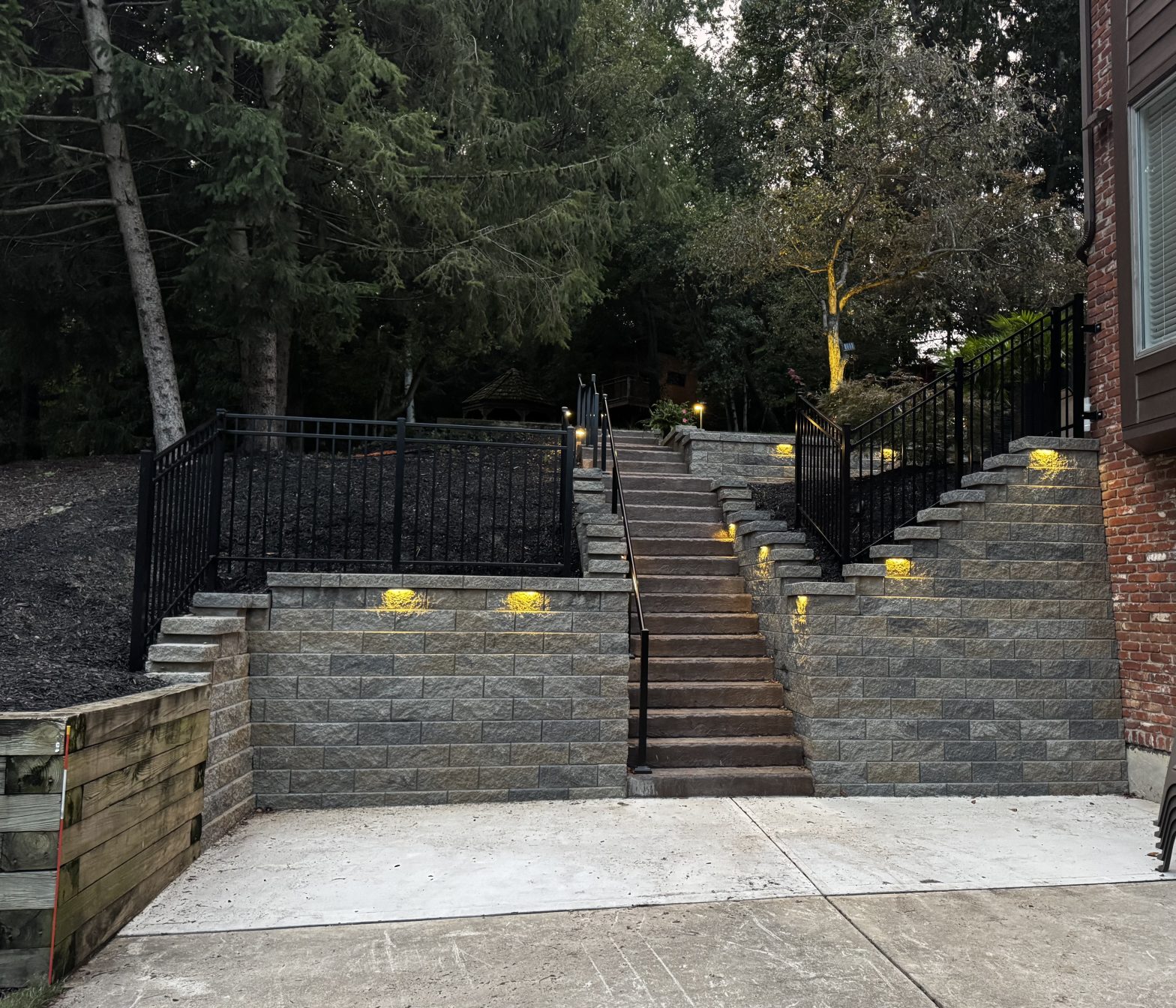
Retaining walls are commonly used to solve several different property challenges.
Sloped properties can experience significant soil erosion, especially during heavy Pittsburgh rainfall. As water moves down a slope, it can carry soil with it and gradually change the shape of your property.
A properly designed retaining wall can help stabilize the slope and prevent soil from continually washing away.
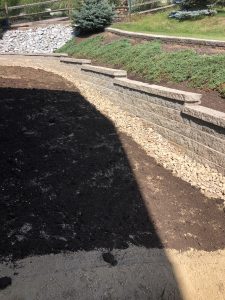
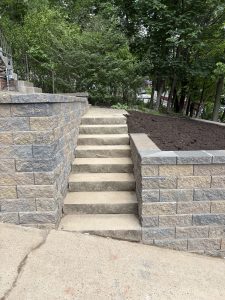
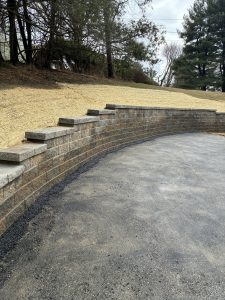
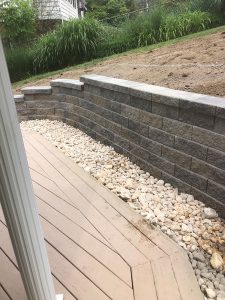
A steep backyard can make it difficult to use your property effectively.
Retaining walls can allow a steep slope to be transformed into multiple, more manageable levels. This can create space for:
Instead of working around a steep slope, a retaining wall can help reshape the property.
Water is one of the biggest considerations when building a retaining wall.
Rainwater and groundwater can build up behind a wall and create significant pressure. Without proper drainage, that pressure can contribute to cracking, shifting, bulging, or even wall failure.
That’s why drainage should be considered before the wall is built, not after water becomes a problem.
Depending on the property, drainage solutions may include perforated pipe, stone backfill, catch basins, grading adjustments, or other systems designed to move water safely away from the wall.
A retaining wall can look great when it is first installed, but problems may appear years later if important construction details were overlooked.
Common causes of retaining wall problems include:
This is why choosing a contractor based solely on the appearance or initial price of a wall can be risky.
A retaining wall needs to be designed around the specific conditions of your property.
There are several types of retaining wall systems, and the right choice depends on the property’s slope, wall height, soil conditions, surrounding structures, and desired appearance. Check out our retaining wall gallery for past retaining wall designs our team has done! Retaining Wall Gallery
Some common options include:
The best material isn’t necessarily the most expensive or the most attractive option. It needs to be appropriate for the structural demands of the project.
One of the most important parts of retaining wall construction happens behind the wall where you may never see it.
A retaining wall needs a way to manage water that reaches the soil behind it. Without proper drainage, water can become trapped behind the wall and increase pressure against the structure.
This is particularly important in Pittsburgh, where properties can experience significant rainfall and many homes are located on sloped terrain.
A well-built wall should account for where water is coming from, where it is going, and how it will be removed from behind the wall.
Not every damaged retaining wall needs to be completely rebuilt.
However, signs of a potentially serious problem include:
If you notice these problems, it is worth having the wall evaluated before the damage becomes more extensive.
In some situations, repairs may be possible. In others, rebuilding the wall may be the better long-term solution.
A retaining wall is an investment in your property. When properly designed and constructed, it can improve the appearance of your landscape while providing important structural and drainage benefits.
At Isbir Construction & Landscape, we have extensive experience with challenging retaining wall projects throughout the Pittsburgh area. Our construction background allows us to look beyond the surface appearance of a wall and consider the grading, drainage, soil, structural requirements, and surrounding property.
If you have a failing retaining wall, a steep slope, erosion problems, or are considering adding usable space to your property, contact Isbir Construction & Landscape to discuss your project.
A retaining wall shouldn’t just look good when it’s finished. It should be built to handle the property, the water, and the conditions it will face for years to come.

Watch our latest videos on a variety of subjects from groundwater to drainage! Gain new knowledge and insight on the topics that impact you.