



If you’ve ever dealt with standing water, soggy grass, or erosion around your property, you know how frustrating (and damaging) poor drainage can be. The tricky part is that not all drainage problems are the same, and choosing the wrong solution can waste time and money without actually fixing the issue.
In this guide, we’ll break down the most common types of drainage problems and the best systems to solve each one, so you can better understand what your yard needs.
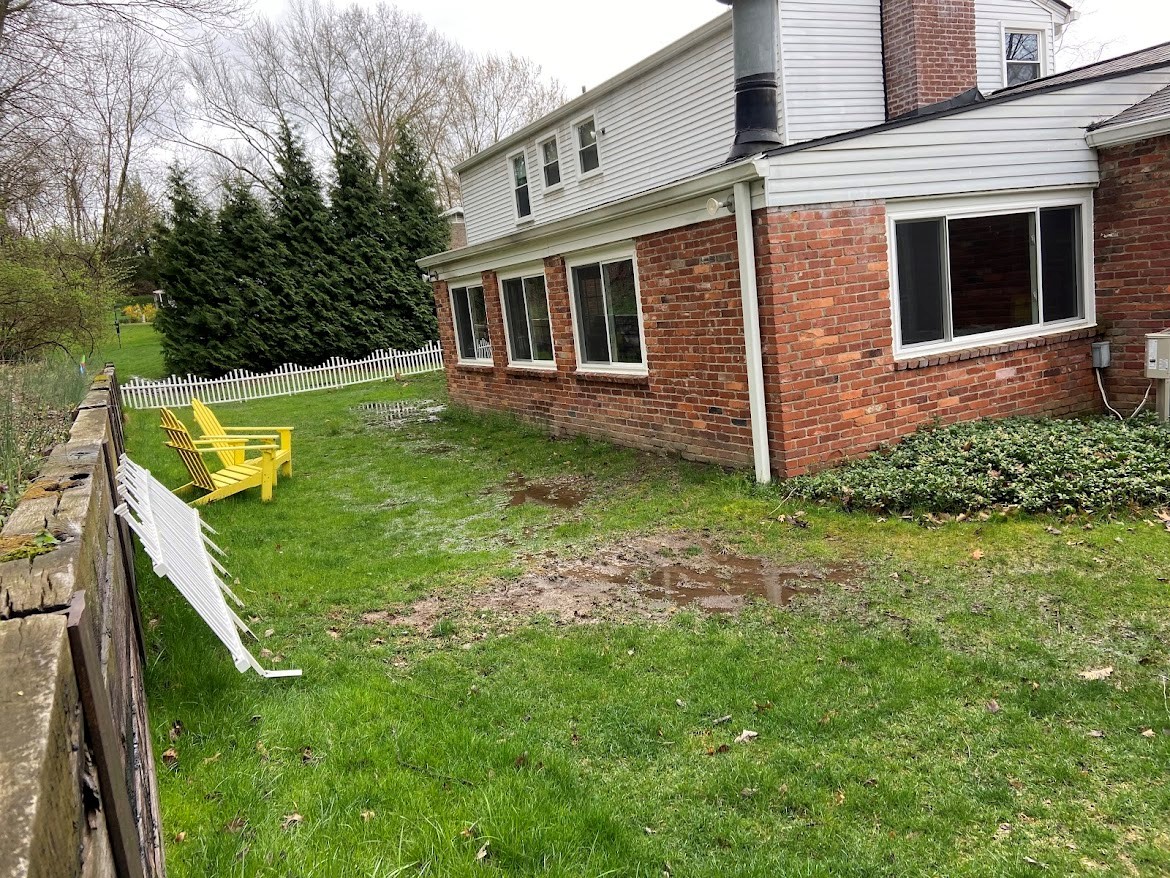
If water collects in certain areas of your yard after rain and takes hours, or even days to drain, you likely have a low-lying area where water naturally pools.
Catch basins and drainpipes are typically the best option here. These systems collect water at the surface and redirect it away from your yard through underground piping.
In some rare cases, a dry well can also be used to disperse the water safely into the ground if there’s no good outlet point.
Water pooling near your home’s foundation is one of the most serious drainage issues. It can lead to basement leaks, structural damage, and mold growth.
A French drain system is one of the most effective ways to address this. Installed underground along the perimeter of your home, it collects groundwater and redirects it away before it can reach your foundation.
You may also need:
· Downspout extensions
· Proper grading (sloping soil away from the house)
If your entire yard feels soft, muddy, or constantly wet, even when it hasn’t rained recently, you may have poor soil drainage or a high-water table.
A subsurface drainage system like a French drain network or perforated pipe system can help remove excess water from below the surface.
In some cases, improving soil conditions with aeration or adding topsoil may also be necessary.
Properties with slopes often deal with water rushing downhill, which can cause erosion, washouts, and damage to landscaping.
A combination of solutions is usually needed:
· Channel drains to capture surface runoff
· Swales (shallow, sloped ditches) to redirect water
· Retaining walls to control erosion and stabilize the slope
Water collecting on hard surfaces like driveways, patios, or walkways can create safety hazards and damage over time.
Trench drains (channel drains) are ideal for these situations. They sit flush with the surface and capture water before it can pool or flow where it shouldn’t.
If your gutters overflow or dump water too close to your home, it can lead to foundation issues and landscape erosion.
Simple fixes can go a long way:
· Downspout extensions
· Underground drain lines connected to your gutter system
These solutions move water safely away from your home and into a designated drainage area.
Every property is different. Soil type, slope, yard size, and existing structures all play a role in determining the right drainage system. In many cases, the best solution is actually a combination of multiple systems working together.
Installing the wrong type of drainage – or placing it incorrectly – can make the problem worse instead of better.
If you’re unsure what’s causing your drainage issue, it’s best to have your property evaluated. A professional can identify the root cause and design a system tailored specifically to your yard.
At Isbir Construction & Landscape, we specialize in diagnosing and solving complex drainage problems. Whether it’s a simple fix or a full-yard drainage system, we’ll help you protect your property and keep your yard functional year-round.
Drainage problems don’t fix themselves – and the longer they go untreated, the more damage they can cause. The key is understanding the type of issue you’re dealing with and choosing a solution that actually addresses the source of the problem.
If your yard isn’t draining the way it should, now is the time to take action.

Watch our latest videos on a variety of subjects from groundwater to drainage! Gain new knowledge and insight on the topics that impact you.