




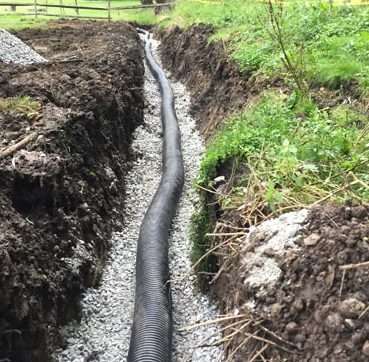
When you’re dealing with a wet basement, a soggy yard, or water pooling around your foundation, a French drain is one of the most reliable ways to move water away from your home. A French drain is a gravel-filled trench equipped with a perforated pipe that collects excess water and directs it to a safer area, such as a storm drain, swale, or daylight outlet.
As experienced French drain installers in Pittsburgh, we’re often asked:
“What’s the best time to install a French drain?”
Technically, a French drain can be installed in any season, but that doesn’t mean every season is equally efficient or cost-effective. Soil conditions, weather patterns, and contractor availability all affect how smoothly your project goes, how long it takes, and even how much it costs.
Planning your project around the right time of year can:
Pittsburgh has specific site conditions that significantly impact French drain installation and overall yard drainage.
Much of the Pittsburgh area has clay-heavy soil. Clay drains slowly and holds onto water, which is exactly why many homeowners struggle with:
From an installation perspective, clay soil is:
That means timing your French drain project for periods when the soil is firm but not overly wet can make trenching and backfilling more efficient and less disruptive to your yard.
Pittsburgh sees a mix of rain, snow, and freeze-thaw cycles throughout the year. With an average annual rainfall of approximately 38 inches, timing your installation can significantly impact the smoothness of your project.
Key local patterns to keep in mind:
Rainy Springs: Early and mid-spring can be quite wet. Saturated soil is harder to trench cleanly, and heavy rain can slow work or delay backfilling.
Hot Summers: Summers tend to bring more stable weather and drier ground, which is ideal for excavation.
Cool, Damp Falls: Fall often has moderate rainfall and cooler temperatures, which can be a favorable balance for drainage work.
Cold Winters: Frozen or partially frozen ground can make digging difficult or, in some cases, not feasible until the soil thaws.
Because of these factors, the best time to install a French drain in Pittsburgh usually lines up with periods of moderate moisture and predictable weather—rather than the extremes.
Let’s walk through how each season affects French drain installation in Pittsburgh, including the pros and cons from an installer’s perspective.
Pros:
Many homeowners are motivated to act after winter, especially if they’ve just experienced:
This is a great time to identify drainage issues, since problem areas are often visible after snowmelt and early rain.
Cons:
Soil is often saturated or muddy, which can:
Spring is an excellent season for inspection and planning, but not always the most efficient time for installation, especially during a very wet month.
Pros:
Dry, stable soil is a significant advantage. Drier ground:
Better conditions to complete a project on schedule
Cons:
Hot working conditions can slow progress during peak heat, although this is usually a minor factor in the overall project.
If many homeowners wait until summer to call, there can still be scheduling delays with popular contractors.
For many Pittsburgh homeowners, summer is a favorable time for French drain installation due to the favorable soil conditions and reduced weather interruptions.
Pros:
Soil tends to have ideal moisture levels—not as soggy as spring and not as dry and hardened as late summer drought.
Cooler temperatures make for efficient working conditions.
Installation in the fall helps prepare your property for:
A French drain installed in the fall often has a full season to settle and perform before the next year’s heavy rain patterns.
Cons:
Shorter days can limit working time.
As winter approaches, there’s a natural deadline to finish excavation, install the system, and restore the yard before the ground freezes.
Overall, late summer through mid-fall is usually the best time to install a French drain in Pittsburgh. The soil is workable, the weather is more stable, and the system can be in place before heavier winter and spring moisture.
Pros:
In some cases, you may find slightly lower contractor demand during the winter months, depending on weather and workload.
If conditions are mild and the ground is not deeply frozen, some limited excavation work may still be possible.
Cons:
While winter installation can sometimes be done, it’s not typically recommended as a first choice unless there’s an urgent drainage problem that can’t wait.
For most Pittsburgh homeowners, the verdict is clear:
Late summer through mid-fall is usually the best time to install a French drain.
The true best time is before heavy seasonal rains start causing foundation issues, basement dampness, or severe erosion in your yard. Planning ahead allows you to address drainage problems proactively, rather than reacting to water damage after it occurs.
Beyond the season, a few specific factors will influence the ideal timing for your project.
Dry or moderately moist soil is easier to:
When soil is extremely saturated, trenches can collapse, making the work more difficult and slower. A good installer will evaluate your yard and suggest scheduling when conditions are favorable.
Not every French drain is the same. The scope of your drainage system affects how timing plays a role.
Foundation or Perimeter Drains: Installed around the home to protect the foundation and basement. These can be more complicated and require careful coordination with landscaping and any nearby structures.
Yard or Surface Drains: Designed to intercept water in low spots or along slopes before it reaches the house. These may be more flexible in terms of timing, but they still benefit from stable, workable soil.
Larger, full-yard systems may be better suited for late summer or fall, when the ground is accessible and conditions are more predictable. Smaller, targeted drains can fit into more flexible windows.
Even in the best season, short-term weather matters. Extended periods of rain can:
A professional installer will monitor the forecast and schedule trenching and backfilling when the risk of heavy rain is lower, helping to protect your investment.
Contractors who specialize in yard drainage in Pittsburgh often book up quickly during peak seasons. Scheduling early in the year can:
While the cost of exterior French drain systems can vary based on specific factors such as system length, depth, access, and soil conditions, planning typically helps control costs by avoiding emergency work during the wettest months.
If you’re thinking about French drain installation in Pittsburgh, here are some practical steps to make the process smoother and more efficient.
Even if you plan to install in late summer or fall, it’s smart to:
This proactive approach helps you get the timing and scope that work best for your property.
Spring is one of the easiest times to see drainage problems in action:
Scheduling an inspection in spring allows the contractor to:
In many cases, a French drain is only one part of an overall drainage solution. To improve results and save time, ask your contractor about:
Combining these projects can reduce disruption to your yard and often results in a more complete and reliable system.
If you are planning:
It makes sense to install your French drain first. Excavation for drainage can disturb soil and existing plantings, so it is more efficient to:
This approach helps protect your investment in outdoor improvements and reduces the likelihood that you’ll have to dig up finished areas later to address a water problem.
For Pittsburgh homeowners, choosing the best time to install a French drain is about more than just convenience. Soil conditions, weather patterns, project scope, and contractor availability all play essential roles in determining the effectiveness and efficiency of your drainage project.
The key is to plan ahead, identify drainage issues early, schedule inspections, and secure installation dates before the busiest part of the season.
If you’ve noticed standing water in your yard or basement dampness this spring, now is a good time to start the conversation. Schedule a French drain consultation with Isbir Construction to ensure your system is designed and installed before the busy season and the next round of heavy rain.

Watch our latest videos on a variety of subjects from groundwater to drainage! Gain new knowledge and insight on the topics that impact you.